The best toy is one that sits just ahead of what your child can already do — interesting, but not impossible.
The 'just-right' challenge
Toys that are too easy get ignored; toys that are too hard get abandoned. Aim for the sweet spot in between.
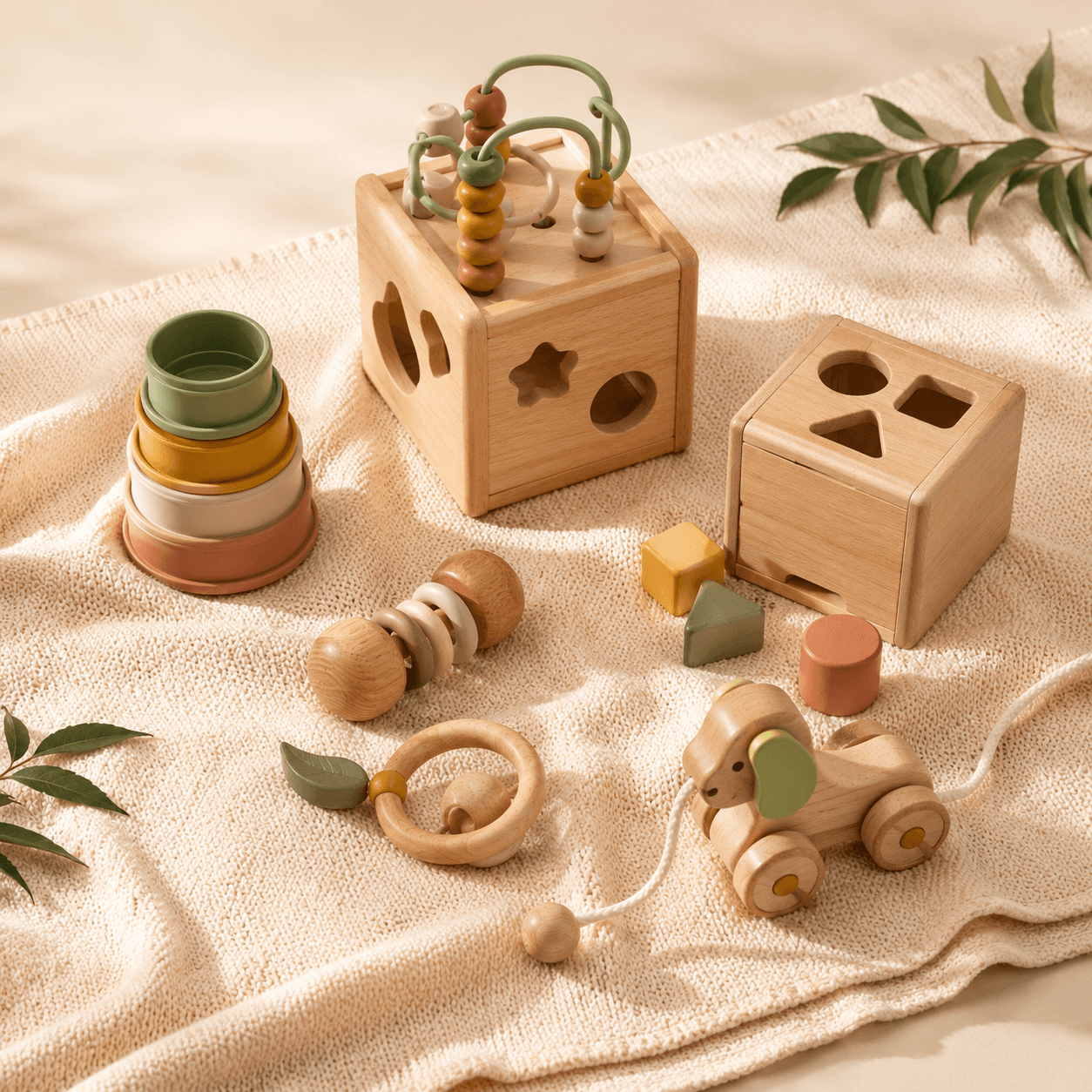
- Babies: cause-and-effect toys that respond to a simple action
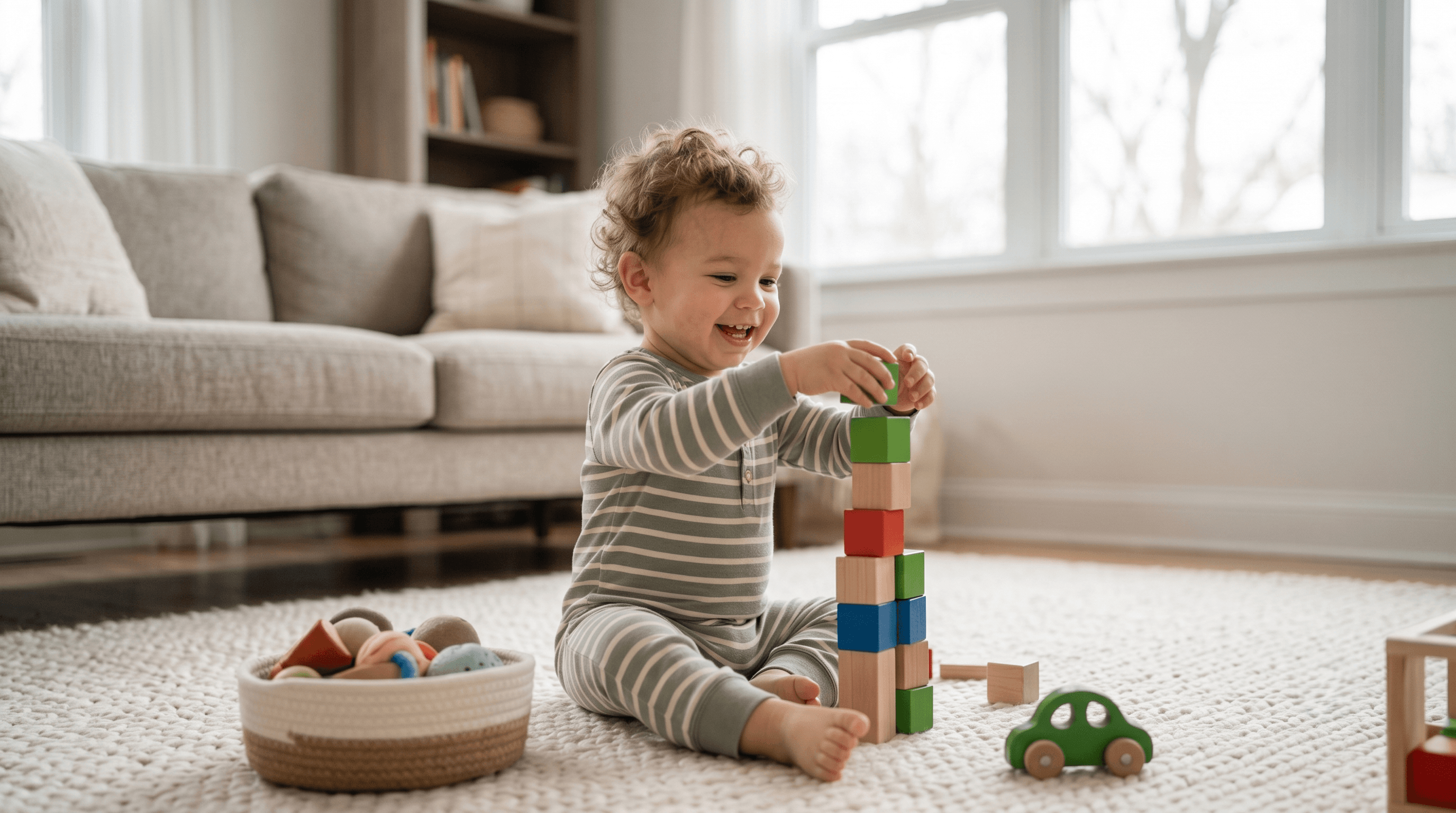
- Toddlers: stacking, sorting and posting toys
- Older toddlers: simple puzzles and pretend-play sets
When in doubt, watch your child for a few minutes. They'll show you what they're working on.
Reading the signs of readiness
A child usually tells you they've outgrown a toy long before you notice it consciously. The toy gets used in a rougher, faster or more inventive way — or it stops being touched at all.
- Boredom: the toy is ignored or abandoned within seconds
- Frustration: repeated failing, then throwing or walking away
- Mastery: the toy is used fluently, almost absent-mindedly
Mastery is your cue to introduce a slightly harder version of the same idea — bigger puzzles, more pieces, a new twist on a familiar game.
Why age labels only go so far
Printed age ranges are set mostly for safety and averages, not for your particular child. Treat them as a floor for small-part safety, then trust what you see in front of you.
A toy that grows with your child — one that can be played with simply now and in more complex ways later — is almost always a better buy than one tuned to a single narrow age.