When a baby starts teething, everything goes straight to the mouth. That makes the material of a teether just as important as its shape.
Why neem wood?
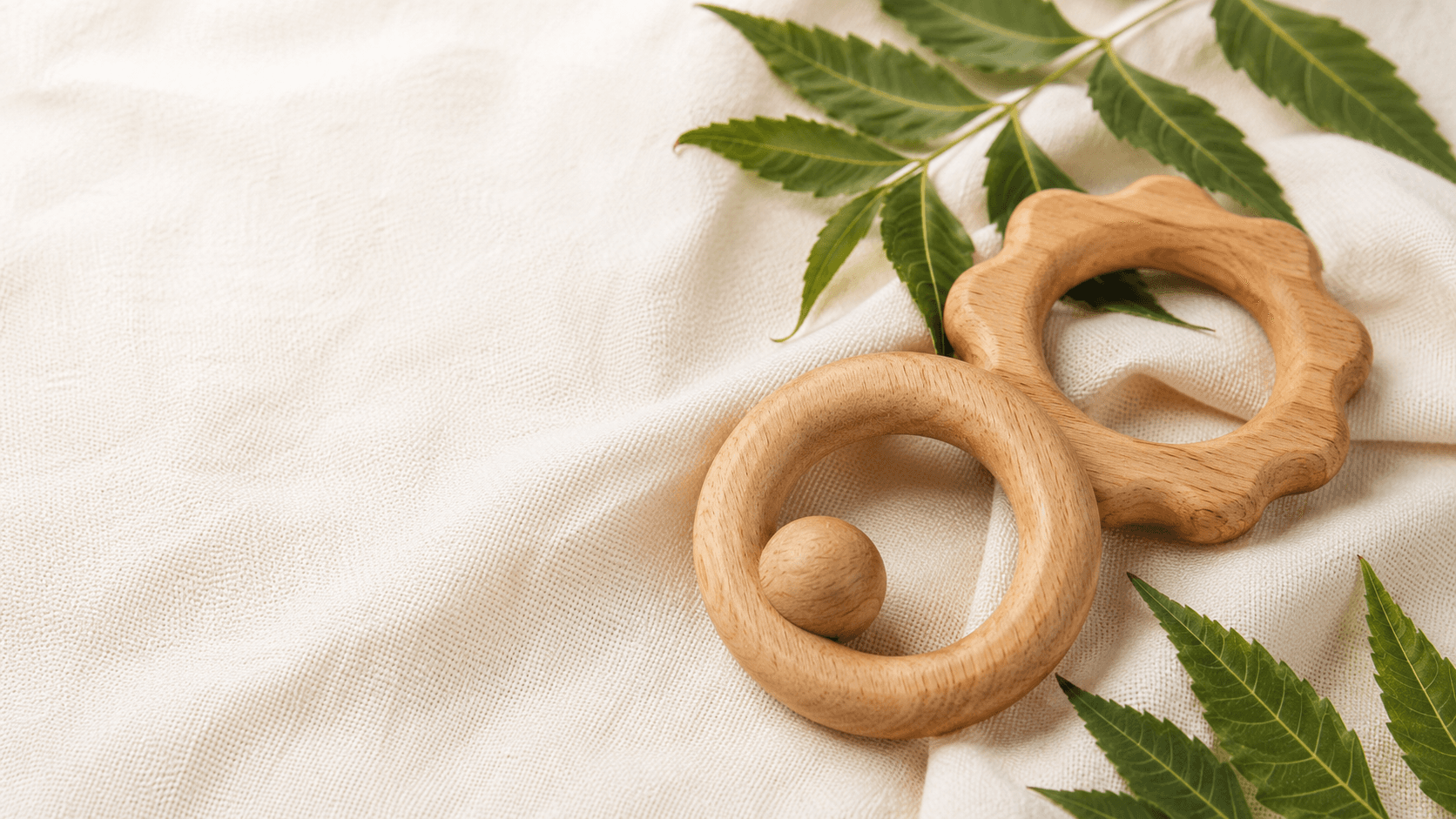
Neem is a dense hardwood with naturally antibacterial properties. It resists moisture and doesn't splinter easily, which makes it a gentle surface for sore gums.
- Naturally antibacterial — no chemical coating needed
- Smooth, splinter-resistant grain
- Light enough for small hands to hold
We finish every teether with food-grade oil and nothing else, so there's no varnish or paint to worry about.
What makes neem different
Neem (Azadirachta indica) has been used across South Asia for centuries — its twigs were the original toothbrush long before nylon bristles existed. That same antibacterial quality is why it stands up so well to hours of enthusiastic chewing.
Because the wood is dense and close-grained, it doesn't soak up saliva the way softer woods do. It stays firm, keeps its shape, and won't turn soft or fuzzy at the edges after weeks of daily use.
How to choose a safe teether
Not every wooden teether is made to the same standard. Before you hand one to a baby, run through a quick checklist:
- One solid piece of wood — no glued joints that can loosen
- A food-grade oil finish, never paint, lacquer or varnish
- Smooth, rounded edges with no splinters or rough spots
- Large enough that it can't be swallowed, light enough to lift
Caring for a wooden teether
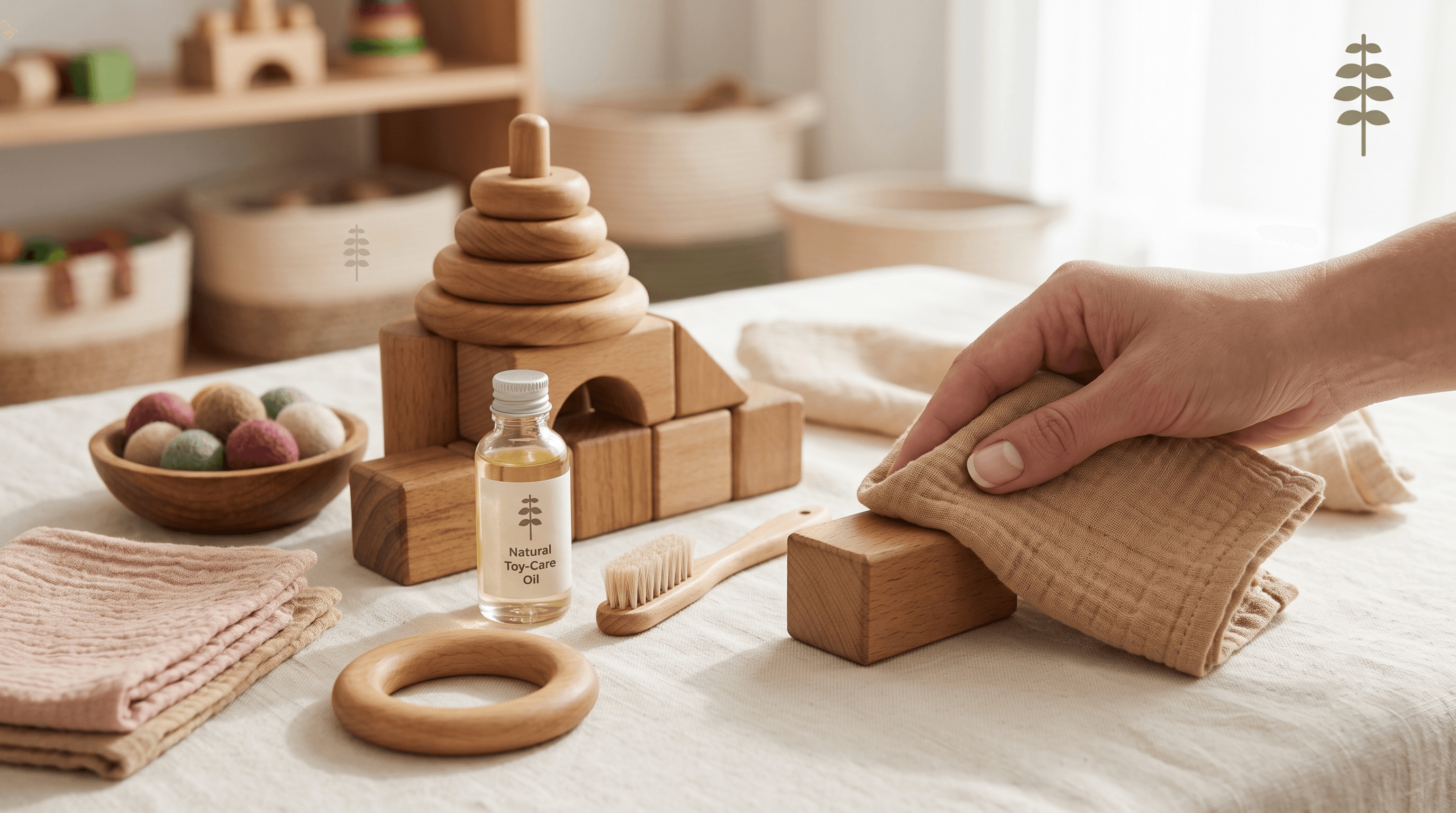
Wipe it clean with a damp cloth and let it air-dry fully — never leave it soaking or run it through the dishwasher, as prolonged water raises the grain. Every few weeks, a thin coat of food-grade oil brings back the smooth, satiny surface.
Looked after this way, a single neem teether will comfortably see a baby through the whole teething stage — and often gets passed down to the next little one in the family.