Long before toddlers can hold a conversation, they're soaking up every word said around them. Play is the easiest place to pour language in.
Narrate, don't quiz
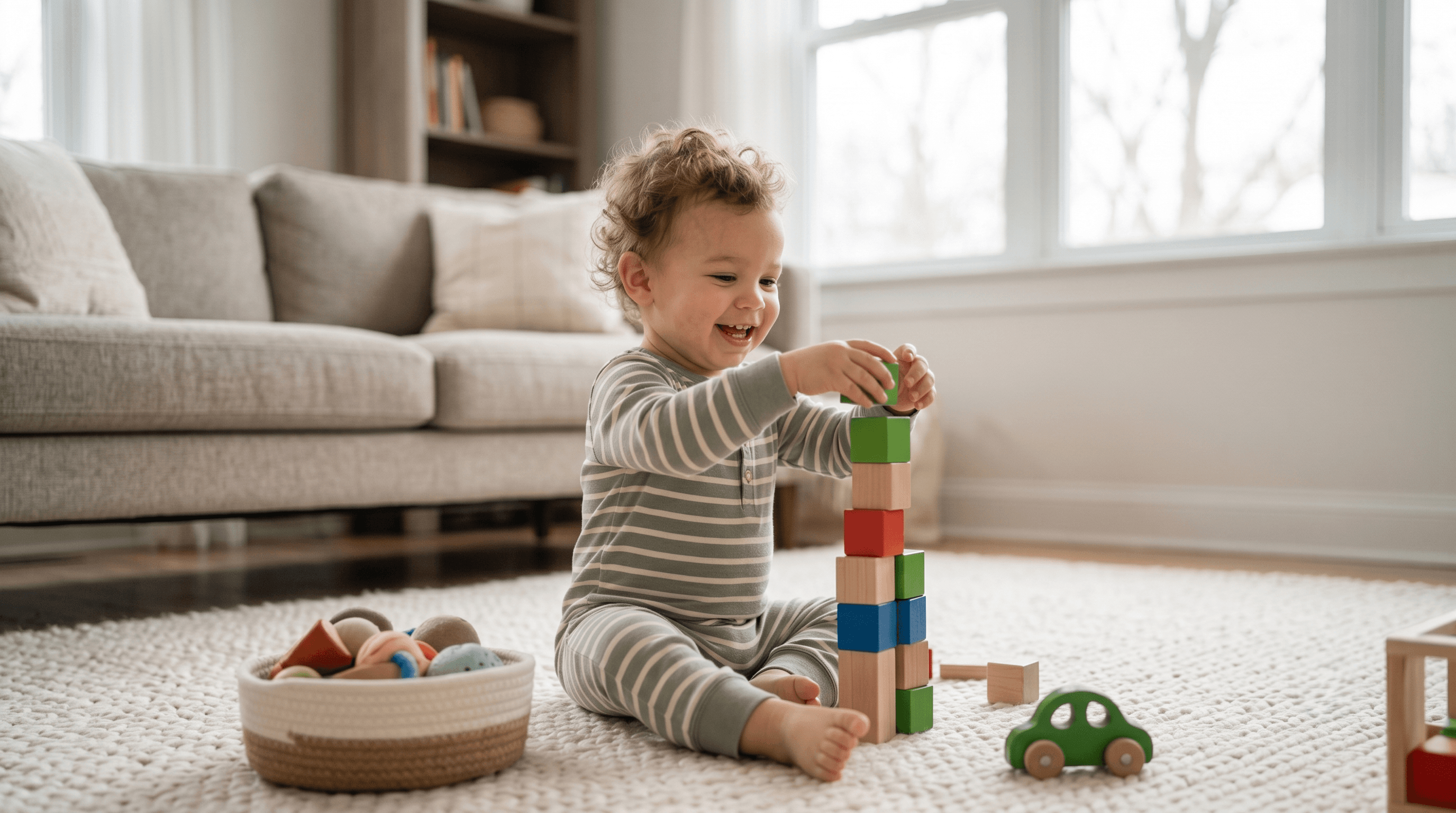
Instead of asking 'what colour is this?', describe what your child is doing: 'You stacked the big red ring on top.' Description invites; quizzing pressures.
- Follow their attention — talk about what they're looking at
- Use real words, not baby words, for objects
- Leave pauses — silence gives them room to answer
Ten minutes of narrated play a day adds up to a remarkable vocabulary by age three.
Widen the words you use
Toddlers understand far more than they can say, so don't shrink your vocabulary to match their speech. Reach for the specific word — 'enormous', 'gently', 'balancing' — and let them grow into it.
- Name feelings as they happen: 'That was frustrating, wasn't it?'
- Add describing words: not just 'ball', but 'the bumpy blue ball'
- Use position words in play: under, behind, on top, between
Turn-taking is a conversation too
Rolling a ball back and forth, or handing blocks to each other, teaches the rhythm of conversation before any words are exchanged: I go, then you go, then I go again.
You don't need a special programme or a set of flashcards. The most powerful language tool you own is your own running commentary during ordinary play.