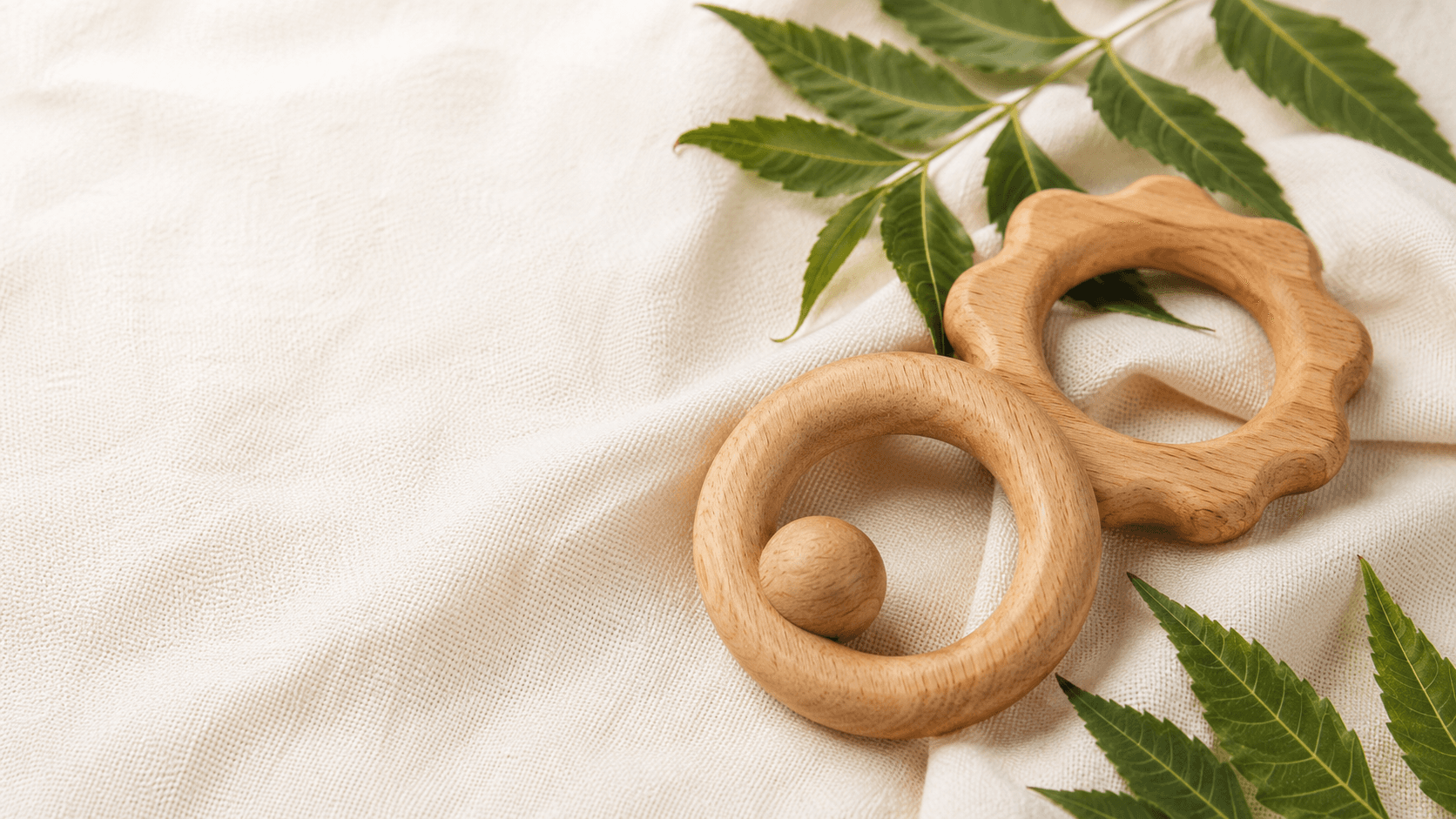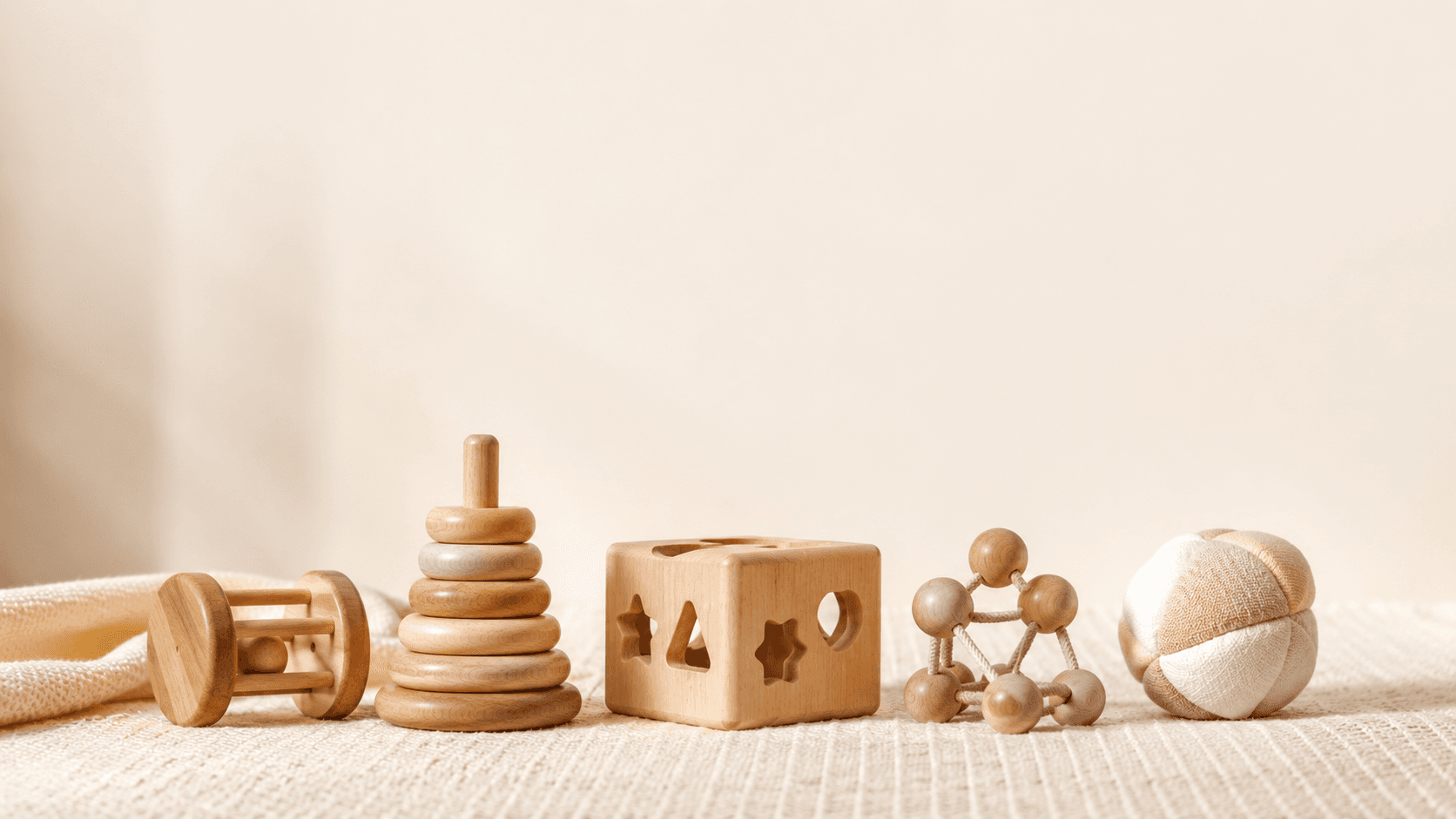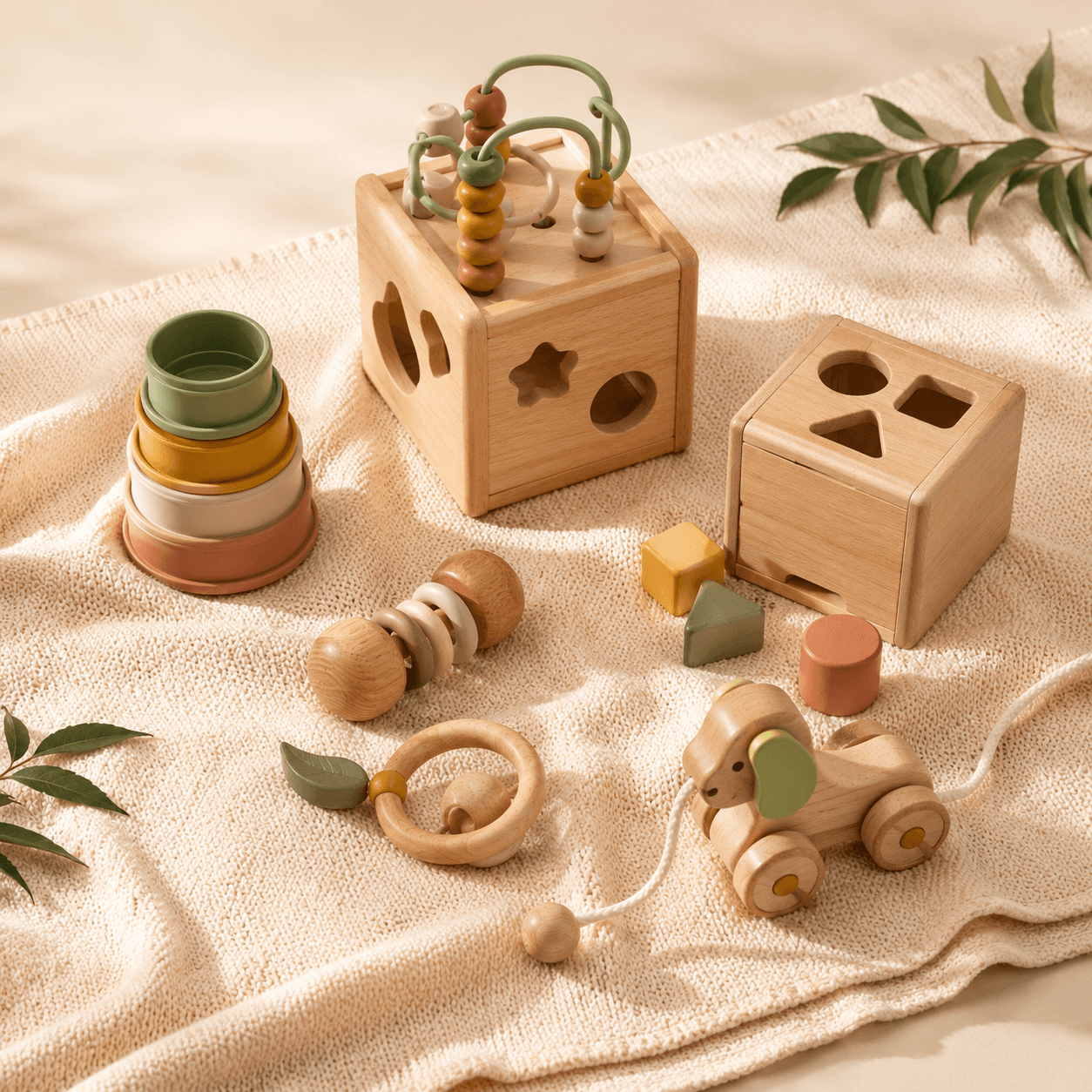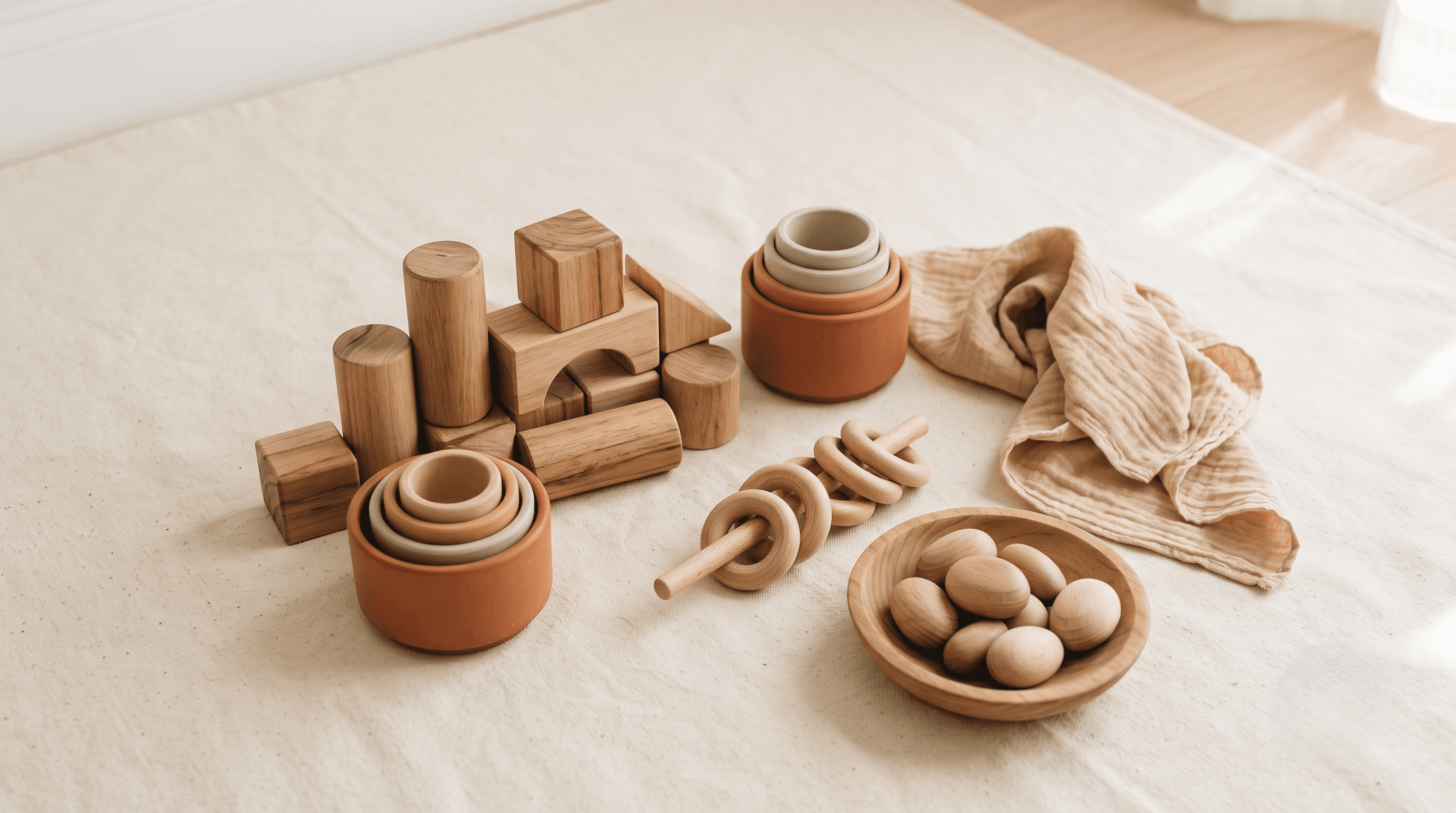
Open-ended toys have no single 'right' way to play. A wooden block can be a phone, a car, a cake or a tower.
What open-ended play builds
- Imagination and storytelling
- Problem-solving and planning
- Independent, screen-free focus
Because the child sets the goal, they stay engaged far longer than they would with a single-purpose toy.
What counts as open-ended
The test is simple: can the toy become more than one thing? A block, a scarf, a wooden bowl and a basket of pinecones all pass. A plastic toy with a single button and a single sound does not.
- Blocks and stacking pieces — towers, roads, walls, animals
- Scarves and cloths — capes, rivers, blankets, hiding places
- Cups and bowls — sorting, pouring, nesting, pretend cooking
- Loose natural parts — stones, shells and cones for counting
How to support it without taking over
The hardest part for adults is staying quiet. Resist the urge to show the 'right' way or to narrate a better idea. Offer the materials, sit nearby, and let the child lead.
When play stalls, a single open question — 'I wonder what else that could be?' — reopens the door without handing over the answer.